September 29, 2026 | Uncategorized
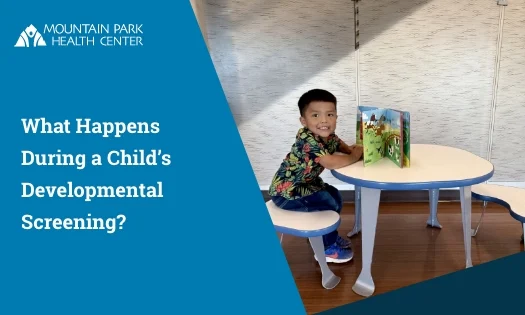
During a developmental screening, a healthcare provider uses a standardized questionnaire or screening tool to check how your child is developing skills such as speaking, moving, learning, and interacting with others. Parents answer questions about everyday activities, and the provider may observe the child playing or completing simple tasks. The results help determine whether a more detailed evaluation or additional support is needed. A screening does not provide a diagnosis.
Watching your child learn new skills is exciting, but it can also bring questions. Is their speech developing as expected? Should they be walking yet? Is a behavior something to discuss with their pediatric provider?
Developmental screening gives families and providers a structured way to explore these questions. At Mountain Park Health Center, our pediatric care teams offer developmental screenings alongside well-child visits, preventive care, and guidance for parents and caregivers.
What Does a Developmental Screening Look For?
Developmental screening looks at how a child is building age-appropriate skills across several areas. Depending on the screening tool, these may include:
- Communication: Making sounds, using gestures, understanding language, and speaking
- Gross motor skills: Using larger muscles for activities such as sitting, walking, or jumping
- Fine motor skills: Using hands and fingers to handle toys and other objects
- Learning and problem-solving: Exploring, figuring things out, and responding to simple challenges
- Social and emotional skills: Connecting with others, expressing feelings, and participating in interactions
Screening helps identify children who may benefit from a closer look at their development. It also creates an opportunity to discuss their strengths and the skills they are still building.
What Happens During the Appointment?
The exact process depends on your child’s age and the screening tool being used, but parents and caregivers play an important role.
You Answer Questions About Everyday Skills
You may complete a questionnaire before or during the visit. Questions focus on things you have seen your child do at home, such as communicating a need, handling a toy, or responding during play.
Answer based on what your child usually does. If you have not seen a particular skill or are unsure what a question means, tell the care team. Your observations help the provider understand your child beyond the appointment itself.
The Provider May Observe Your Child
Your provider may watch your child move, play, communicate, or interact with you. They may ask you to try a simple activity together.
This is not an academic test, and your child does not need to practice beforehand. The goal is to learn about their current abilities and decide whether any areas need further attention.
You Discuss the Results and Next Steps
The provider reviews the screening results alongside your concerns, your child’s history, and their observations. Depending on the findings, they may recommend continued monitoring, another screening, or a more detailed developmental evaluation.
Ask what the results mean, whether a referral is needed, and when you should follow up.
When Should Children Have Developmental Screenings?
The American Academy of Pediatrics recommends standardized developmental screening for all children during well-child visits at:
- 9 months
- 18 months
- 30 months
Screening specifically for autism is recommended at 18 and 24 months.
Additional screening may be appropriate whenever a parent or provider has concerns. Children with certain risk factors, such as premature birth, may need closer monitoring or additional screenings. If a recommended screening was missed, ask about completing it at the next visit.
How Is Screening Different From Tracking Milestones?
Developmental monitoring means watching how your child grows and gains skills over time. Parents, caregivers, teachers, and healthcare providers all contribute observations.
Developmental screening uses a formal, validated tool to take a closer look at development at a particular point in time.
Milestone checklists can help you notice changes and prepare questions, but they do not replace standardized screening. Both approaches help families and providers recognize when a child may need additional assessment.
What if the Screening Identifies a Concern?
A screening result that raises a concern does not automatically mean your child has a developmental condition. It means more information may be needed.
Your provider may recommend a specialist evaluation or a referral to an early intervention program. Depending on your child’s needs, support could involve professionals such as speech-language therapists, occupational therapists, or physical therapists.
Early intervention programs serve eligible infants and toddlers younger than three. Your pediatric provider can explain the referral process and help your family understand the next steps.
How Can Parents Prepare for a Developmental Screening?
You know how your child behaves in familiar settings, making your input especially valuable. Before the appointment:
- Write down questions about speech, movement, play, or interactions.
- Note specific examples of skills you have observed.
- Bring relevant feedback from childcare providers or teachers.
- Share any previous developmental evaluations or services.
- Tell the provider about skills your child previously used but has stopped showing.
If you are concerned, contact your child’s provider rather than waiting for the next scheduled screening. Your questions deserve attention even if an earlier screening did not identify a concern.
Support Your Child’s Development With Mountain Park Health Center
Whether you have a specific concern or simply want to understand what comes next, Mountain Park Health Center’s pediatric teams are here to help. We provide developmental screenings, well-child visits, and referrals to specialists when needed.
Call (602) 243-7277 to schedule an appointment, explore our pediatric services, or find a clinic convenient for your family. Together, we can help you understand your child’s needs and take the next step in supporting their development.
Frequently Asked Questions About Developmental Screening
What is a developmental screening?
A developmental screening uses a standardized tool to check a child’s communication, movement, learning, and social skills. It helps identify whether a child may need a more detailed evaluation or additional support.
At what ages should children have developmental screenings?
The American Academy of Pediatrics recommends developmental screening at 9, 18, and 30 months, with autism screening at 18 and 24 months. Additional screening may be recommended whenever concerns arise.
Does developmental screening diagnose autism or a developmental delay?
No. Screening identifies possible concerns but does not establish a diagnosis. A more detailed evaluation may be recommended to understand the child’s development and support needs.
Does developmental screening involve shots or blood tests?
The screening itself generally involves a questionnaire, discussion, and sometimes observation or simple activities. Other care provided during the same appointment may include vaccinations or tests recommended for separate reasons.
What happens if my child’s screening shows a concern?
The provider will discuss the results and may recommend follow-up screening, a developmental evaluation, or an early intervention referral. A concerning result does not automatically mean your child has a developmental condition.
Should I wait until the next well-child visit if I am worried about my child’s development?
No. Contact your child’s pediatric provider when you have a concern, especially if your child has lost a skill they previously used. The provider can determine whether an earlier appointment or evaluation is needed.
# What Happens During a Child’s Developmental Screening? **During a developmental screening, a healthcare provider uses a standardized questionnaire or screening tool to check how your child is developing skills such as speaking, moving, learning, and interacting with others. Parents answer questions about everyday activities, and the provider may observe the child playing or completing simple tasks. The results help determine whether a more detailed evaluation or additional support is needed. A screening does not provide a diagnosis.** Watching your child learn new skills is exciting, but it can also bring questions. Is their speech developing as expected? Should they be walking yet? Is a behavior something to discuss with their pediatric provider? Developmental screening gives families and providers a structured way to explore these questions. At Mountain Park Health Center, our [pediatric care teams](https://mountainparkhealth.org/pediatrics/) offer developmental screenings alongside well-child visits, preventive care, and guidance for parents and caregivers. ## What Does a Developmental Screening Look For? Developmental screening looks at how a child is building age-appropriate skills across several areas. Depending on the screening tool, these may include: – **Communication:** Making sounds, using gestures, understanding language, and speaking – **Gross motor skills:** Using larger muscles for activities such as sitting, walking, or jumping – **Fine motor skills:** Using hands and fingers to handle toys and other objects – **Learning and problem-solving:** Exploring, figuring things out, and responding to simple challenges – **Social and emotional skills:** Connecting with others, expressing feelings, and participating in interactions Screening helps identify children who may benefit from a closer look at their development. It also creates an opportunity to discuss their strengths and the skills they are still building. ## What Happens During the Appointment? The exact process depends on your child’s age and the screening tool being used, but parents and caregivers play an important role. ### You Answer Questions About Everyday Skills You may complete a questionnaire before or during the visit. Questions focus on things you have seen your child do at home, such as communicating a need, handling a toy, or responding during play. Answer based on what your child usually does. If you have not seen a particular skill or are unsure what a question means, tell the care team. Your observations help the provider understand your child beyond the appointment itself. ### The Provider May Observe Your Child Your provider may watch your child move, play, communicate, or interact with you. They may ask you to try a simple activity together. This is not an academic test, and your child does not need to practice beforehand. The goal is to learn about their current abilities and decide whether any areas need further attention. ### You Discuss the Results and Next Steps The provider reviews the screening results alongside your concerns, your child’s history, and their observations. Depending on the findings, they may recommend continued monitoring, another screening, or a more detailed developmental evaluation. Ask what the results mean, whether a referral is needed, and when you should follow up. ## When Should Children Have Developmental Screenings? The American Academy of Pediatrics recommends standardized developmental screening for all children during well-child visits at: – **9 months** – **18 months** – **30 months** Screening specifically for autism is recommended at **18 and 24 months**. Additional screening may be appropriate whenever a parent or provider has concerns. Children with certain risk factors, such as premature birth, may need closer monitoring or additional screenings. If a recommended screening was missed, ask about completing it at the next visit. ## How Is Screening Different From Tracking Milestones? **Developmental monitoring** means watching how your child grows and gains skills over time. Parents, caregivers, teachers, and healthcare providers all contribute observations. **Developmental screening** uses a formal, validated tool to take a closer look at development at a particular point in time. Milestone checklists can help you notice changes and prepare questions, but they do not replace standardized screening. Both approaches help families and providers recognize when a child may need additional assessment. ## What if the Screening Identifies a Concern? A screening result that raises a concern does not automatically mean your child has a developmental condition. It means more information may be needed. Your provider may recommend a specialist evaluation or a referral to an early intervention program. Depending on your child’s needs, support could involve professionals such as speech-language therapists, occupational therapists, or physical therapists. Early intervention programs serve eligible infants and toddlers younger than three. Your pediatric provider can explain the referral process and help your family understand the next steps. ## How Can Parents Prepare for a Developmental Screening? You know how your child behaves in familiar settings, making your input especially valuable. Before the appointment: – Write down questions about speech, movement, play, or interactions. – Note specific examples of skills you have observed. – Bring relevant feedback from childcare providers or teachers. – Share any previous developmental evaluations or services. – Tell the provider about skills your child previously used but has stopped showing. If you are concerned, contact your child’s provider rather than waiting for the next scheduled screening. Your questions deserve attention even if an earlier screening did not identify a concern. ## Support Your Child’s Development With Mountain Park Health Center Whether you have a specific concern or simply want to understand what comes next, Mountain Park Health Center’s pediatric teams are here to help. We provide developmental screenings, well-child visits, and referrals to specialists when needed. **Call (602) 243-7277 to schedule an appointment**, explore our [pediatric services](https://mountainparkhealth.org/pediatrics/), or [find a clinic](https://mountainparkhealth.org/locations/) convenient for your family. Together, we can help you understand your child’s needs and take the next step in supporting their development. ## Frequently Asked Questions About Developmental Screening ### What is a developmental screening? A developmental screening uses a standardized tool to check a child’s communication, movement, learning, and social skills. It helps identify whether a child may need a more detailed evaluation or additional support. ### At what ages should children have developmental screenings? The American Academy of Pediatrics recommends developmental screening at 9, 18, and 30 months, with autism screening at 18 and 24 months. Additional screening may be recommended whenever concerns arise. ### Does developmental screening diagnose autism or a developmental delay? No. Screening identifies possible concerns but does not establish a diagnosis. A more detailed evaluation may be recommended to understand the child’s development and support needs. ### Does developmental screening involve shots or blood tests? The screening itself generally involves a questionnaire, discussion, and sometimes observation or simple activities. Other care provided during the same appointment may include vaccinations or tests recommended for separate reasons. ### What happens if my child’s screening shows a concern? The provider will discuss the results and may recommend follow-up screening, a developmental evaluation, or an early intervention referral. A concerning result does not automatically mean your child has a developmental condition. ### Should I wait until the next well-child visit if I am worried about my child’s development? No. Contact your child’s pediatric provider when you have a concern, especially if your child has lost a skill they previously used. The provider can determine whether an earlier appointment or evaluation is needed.